A MapLibre style editor that keeps the JSON legible.
Mapstrata makes working with massive style.json files easy, allowing cartographers to manage design palettes using variables and themes. Exports come in two forms: a project file that decomposes the monolithic layer list into one file per layer, so changes make sense in git, and a single validated style.json per theme.
A change that should take five minutes takes fifty
One color duplicated across dozens of layers, and you can't just search and replace.
No good solution for maintaining open source stylesheets
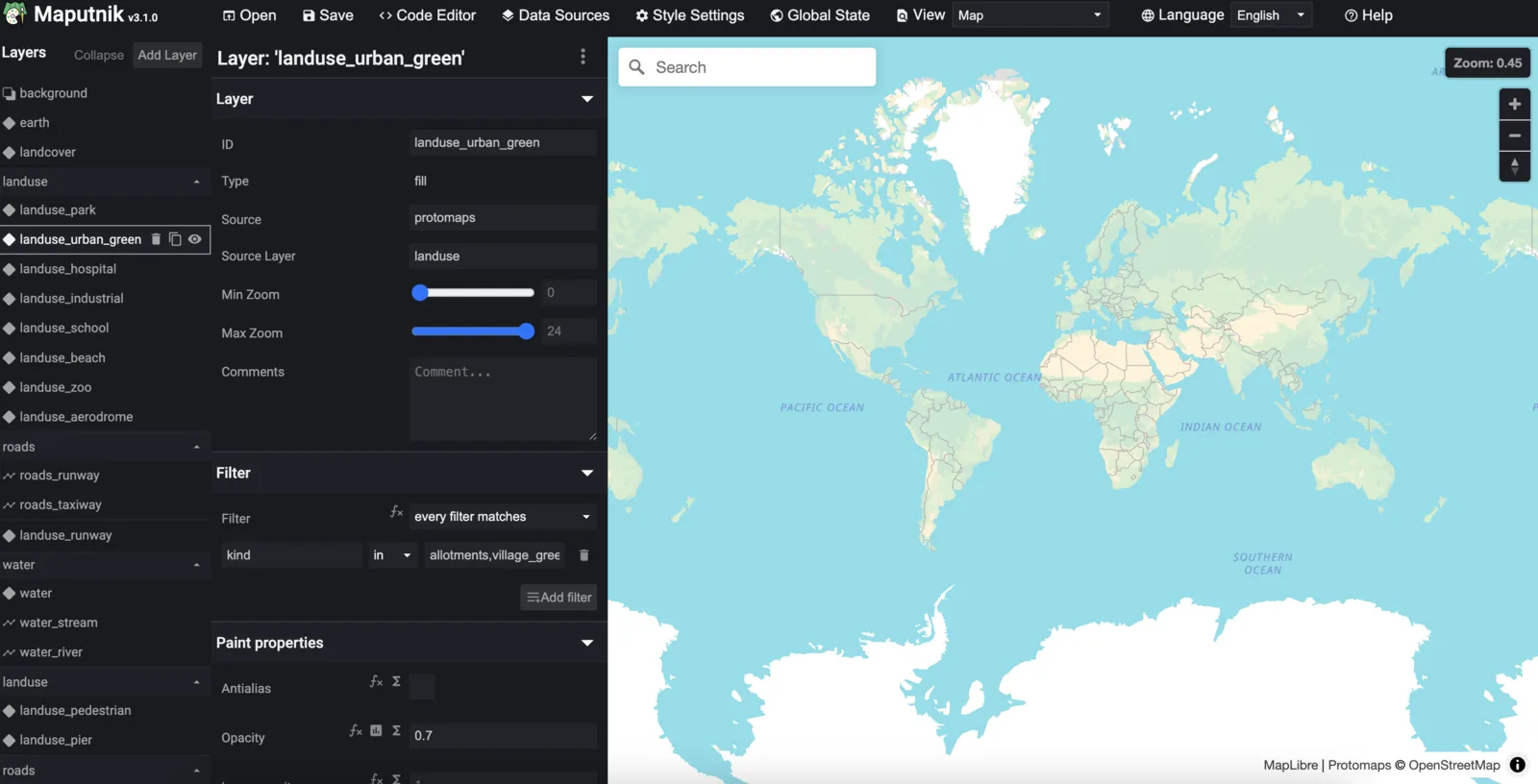
style.json.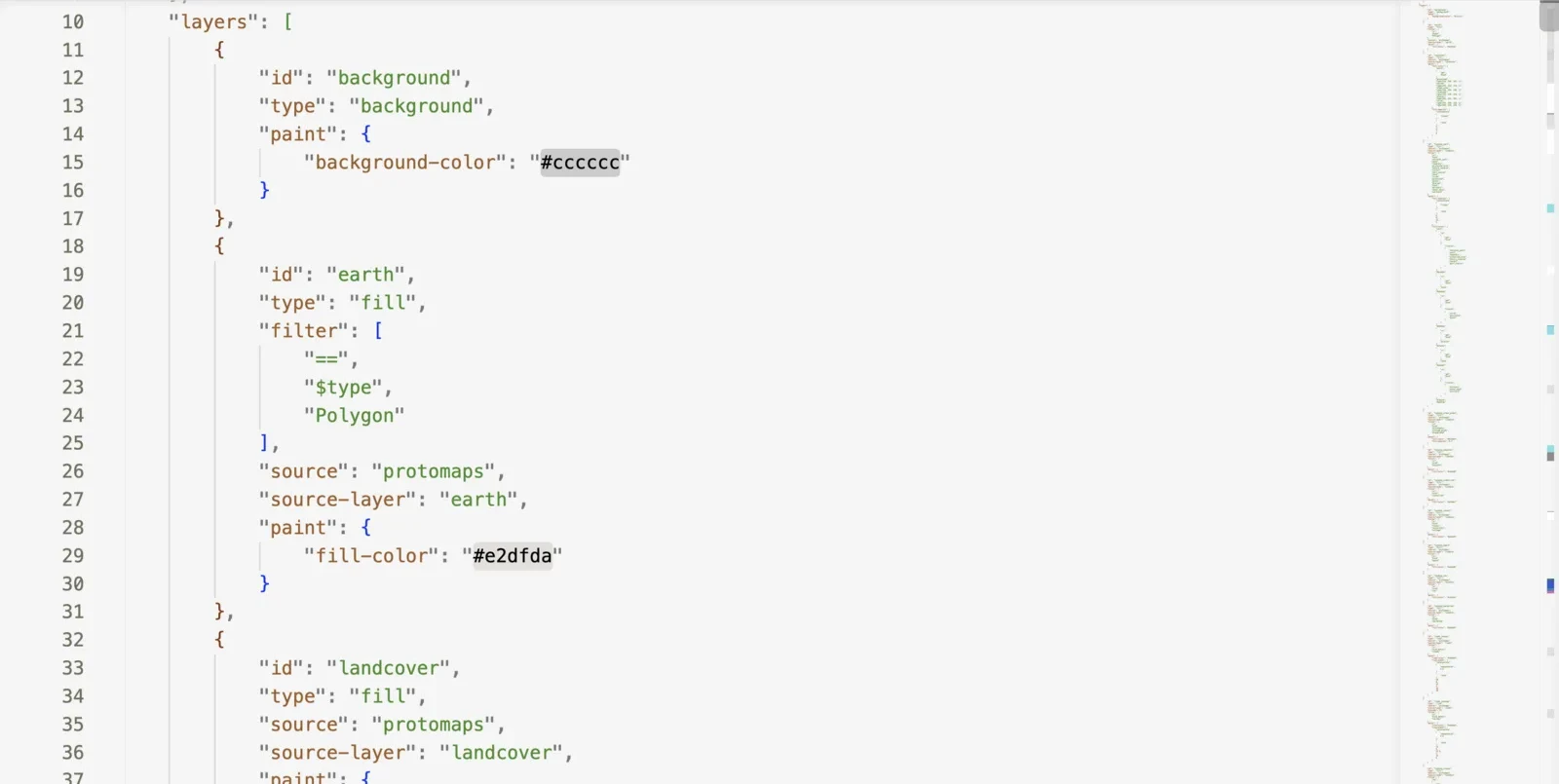
One stylesheet or related stylesheets, managed together
Import one on its own, or import a family built from the same sources and work on them as a single project.
- Import
- Point at a
style.jsonand see it rendered in the viewport. - Theme-pairing
- Seed a theme from a sibling style on the same tile source; layers pair by id, order and source.
- Variables
- Every property value can be stored as a variable and shared within and across themes: colors and sizes, but also expressions, fonts and icons.
- Decompose
- One file per layer on disk, so an edit lands as a readable diff instead of churn inside one big document.
- Export
- One validated
style.jsonper theme, plus a git-ready project file if desired.
Edit properties easily
Darken the admin boundaries and see the change instantly; export to see the git diff.
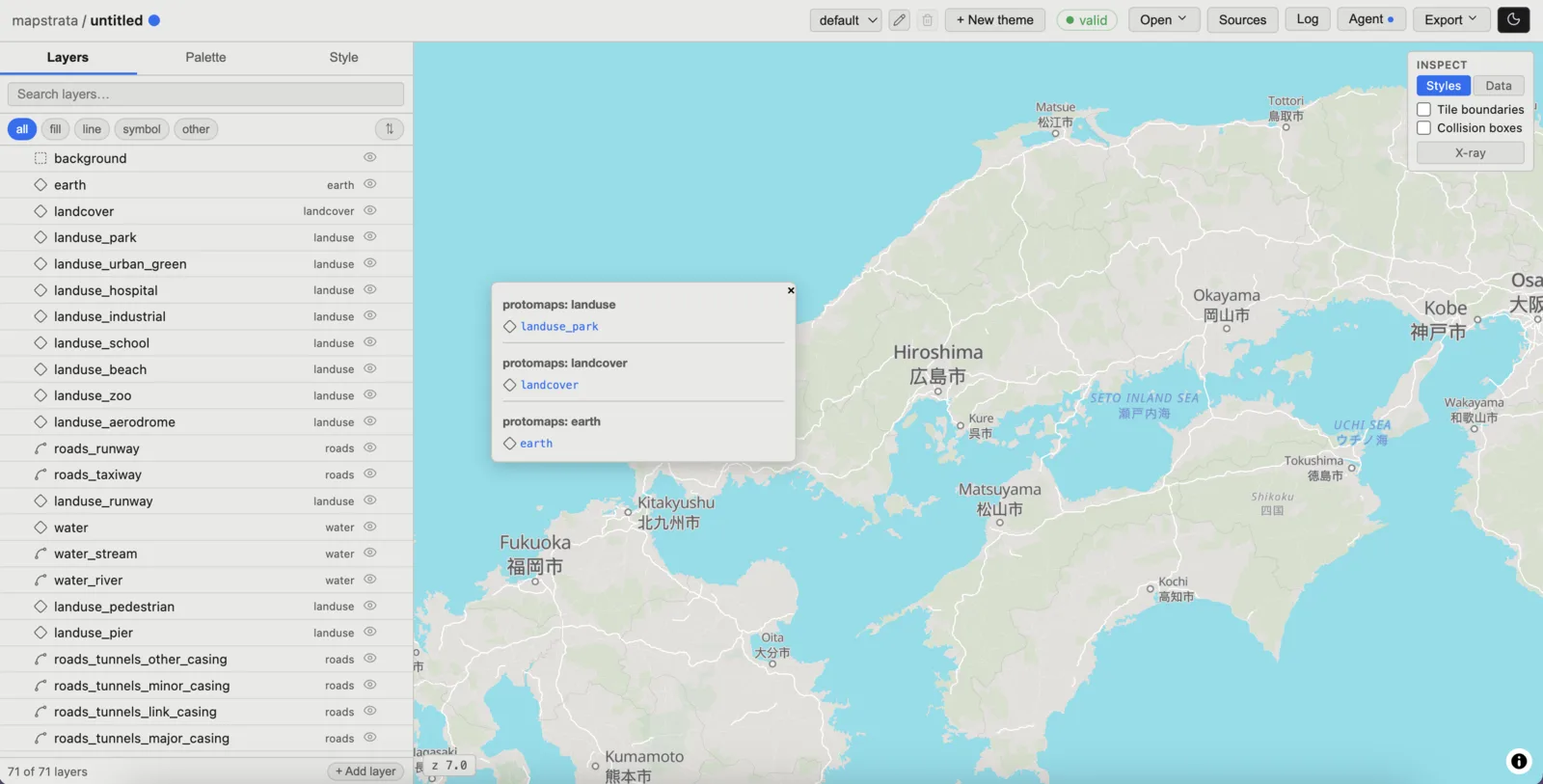
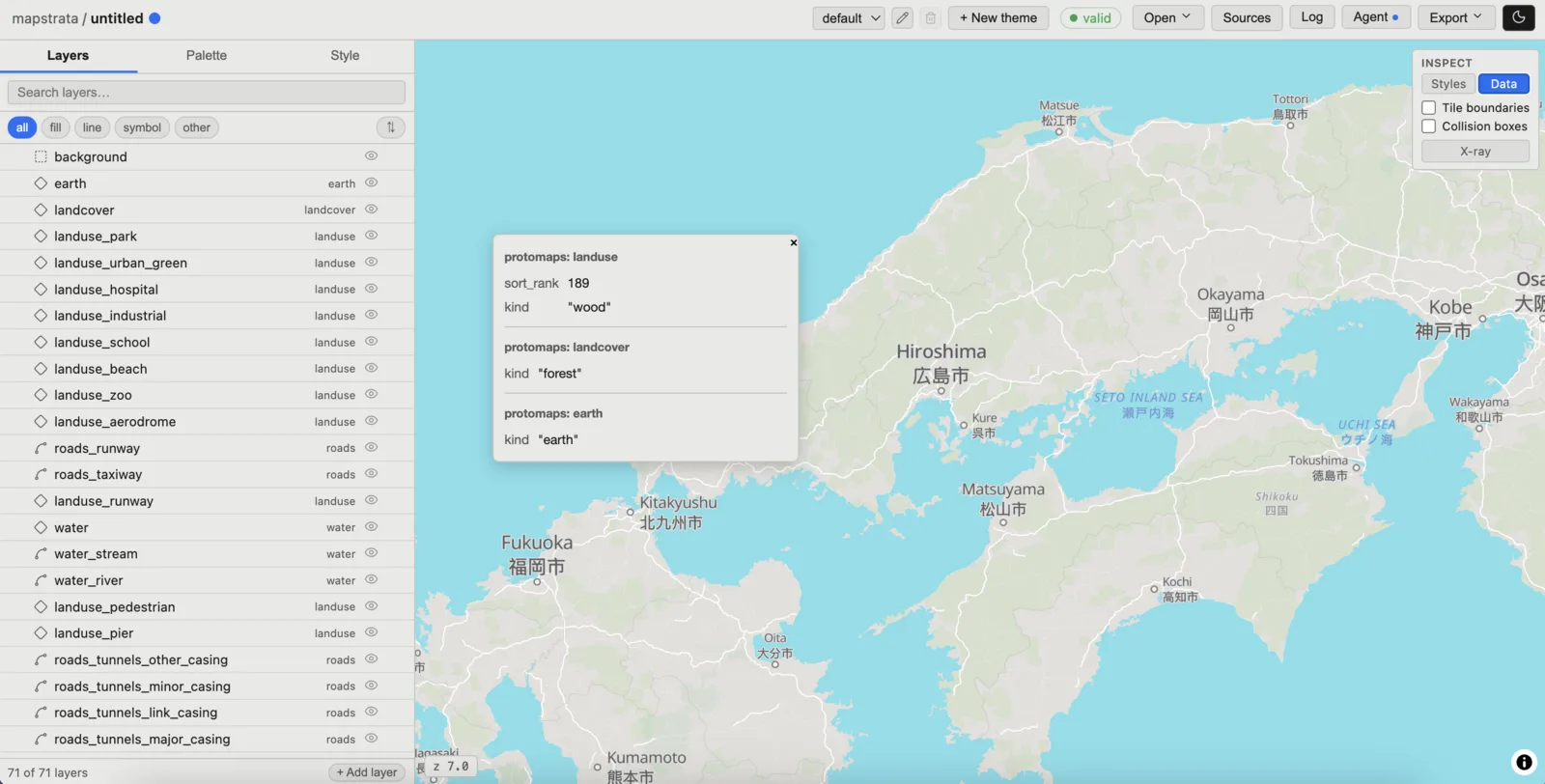
line-color on the boundaries layer. The preview updates as you type. Undo and redo back and forth through your edits, and export the log alongside them.style.json.What you get after the import
Every panel below is the same imported stylesheet.
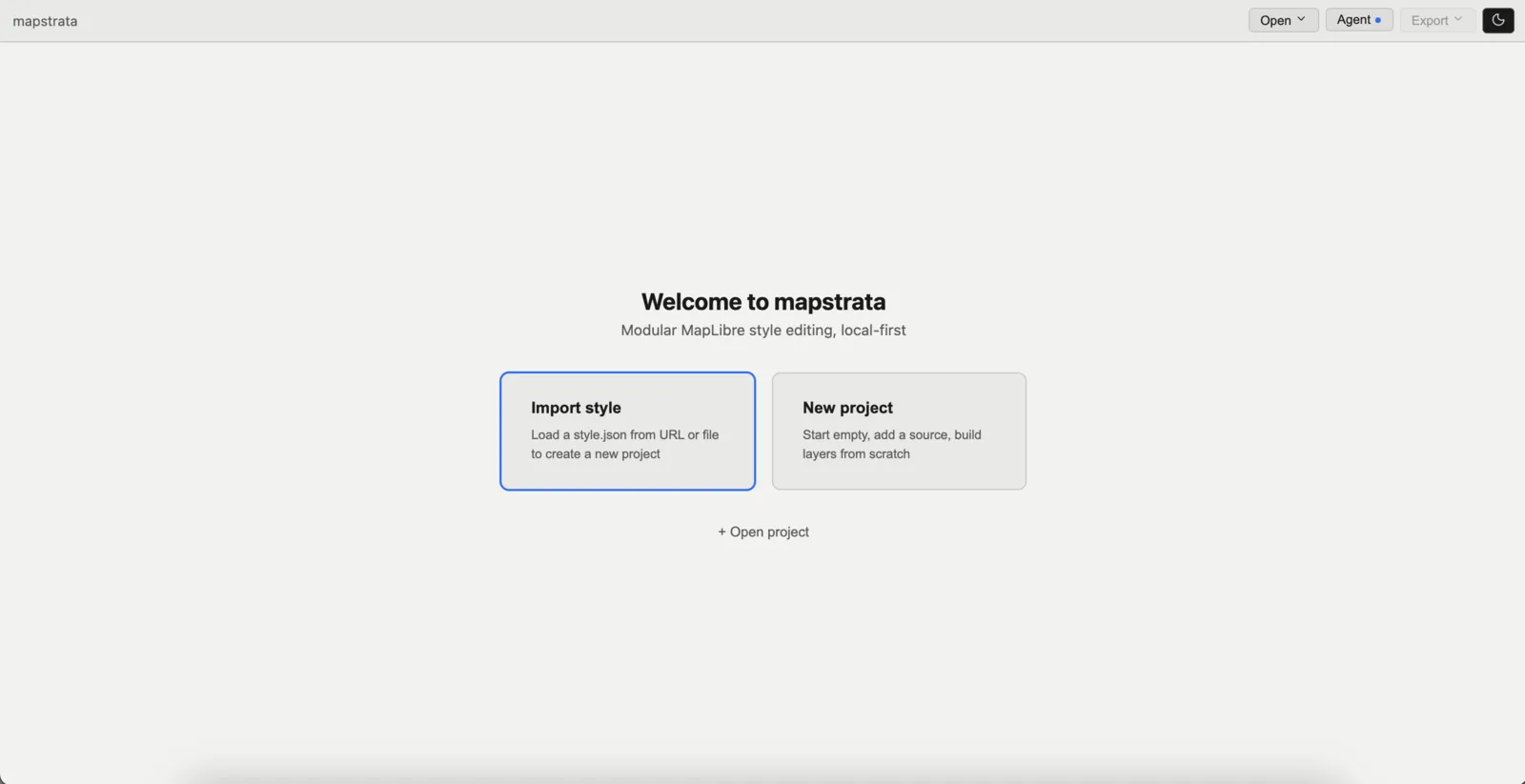
style.json, or start empty.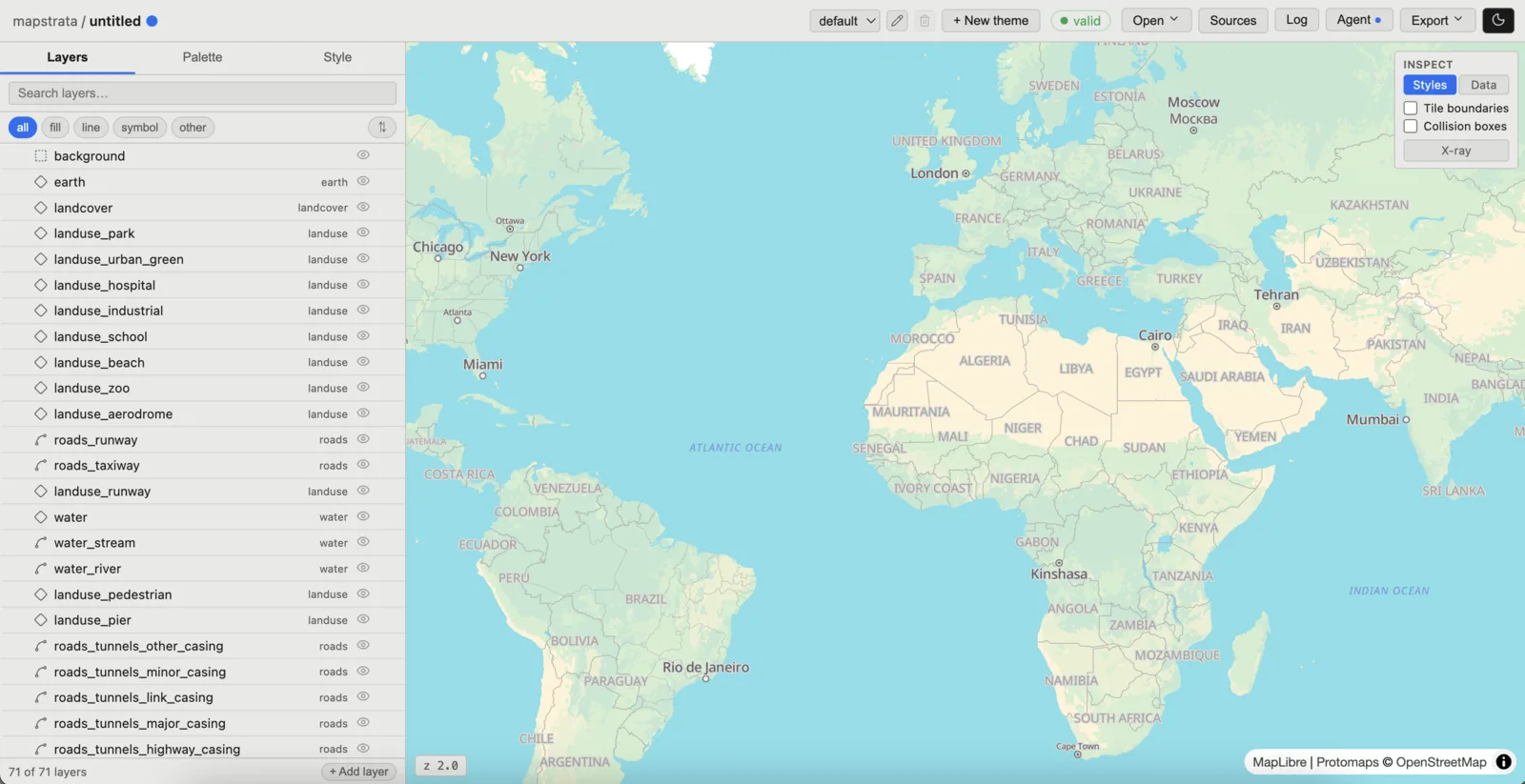
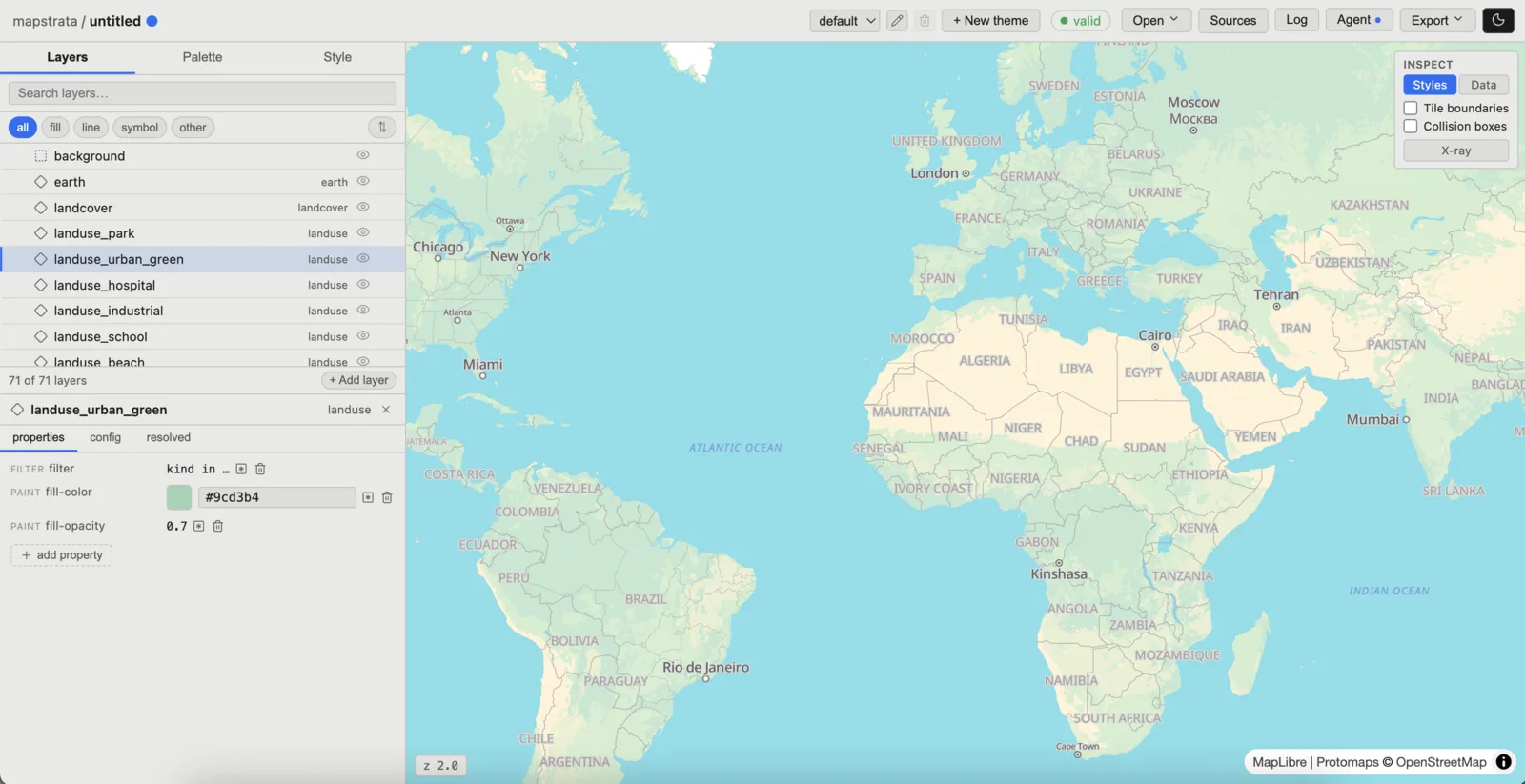
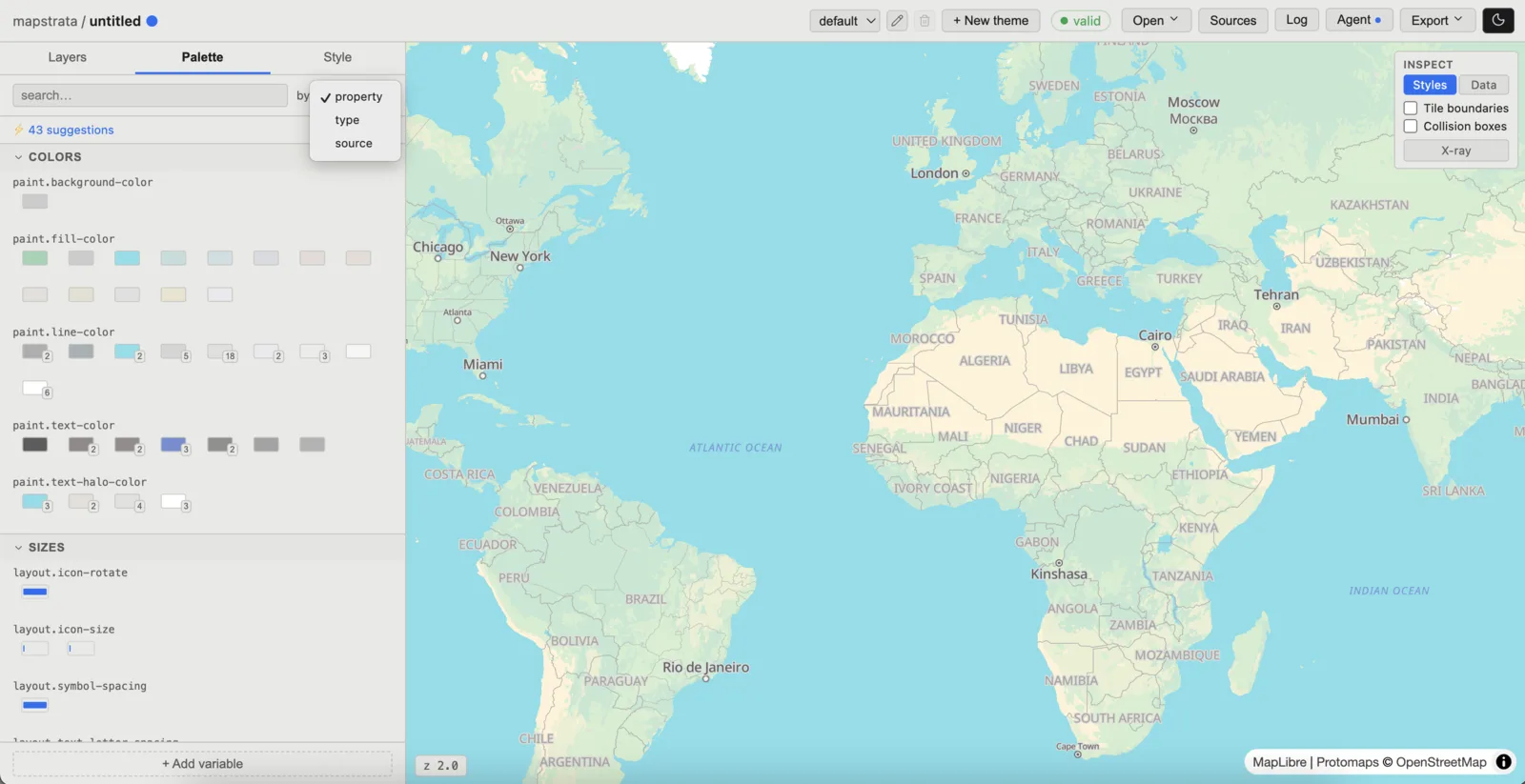
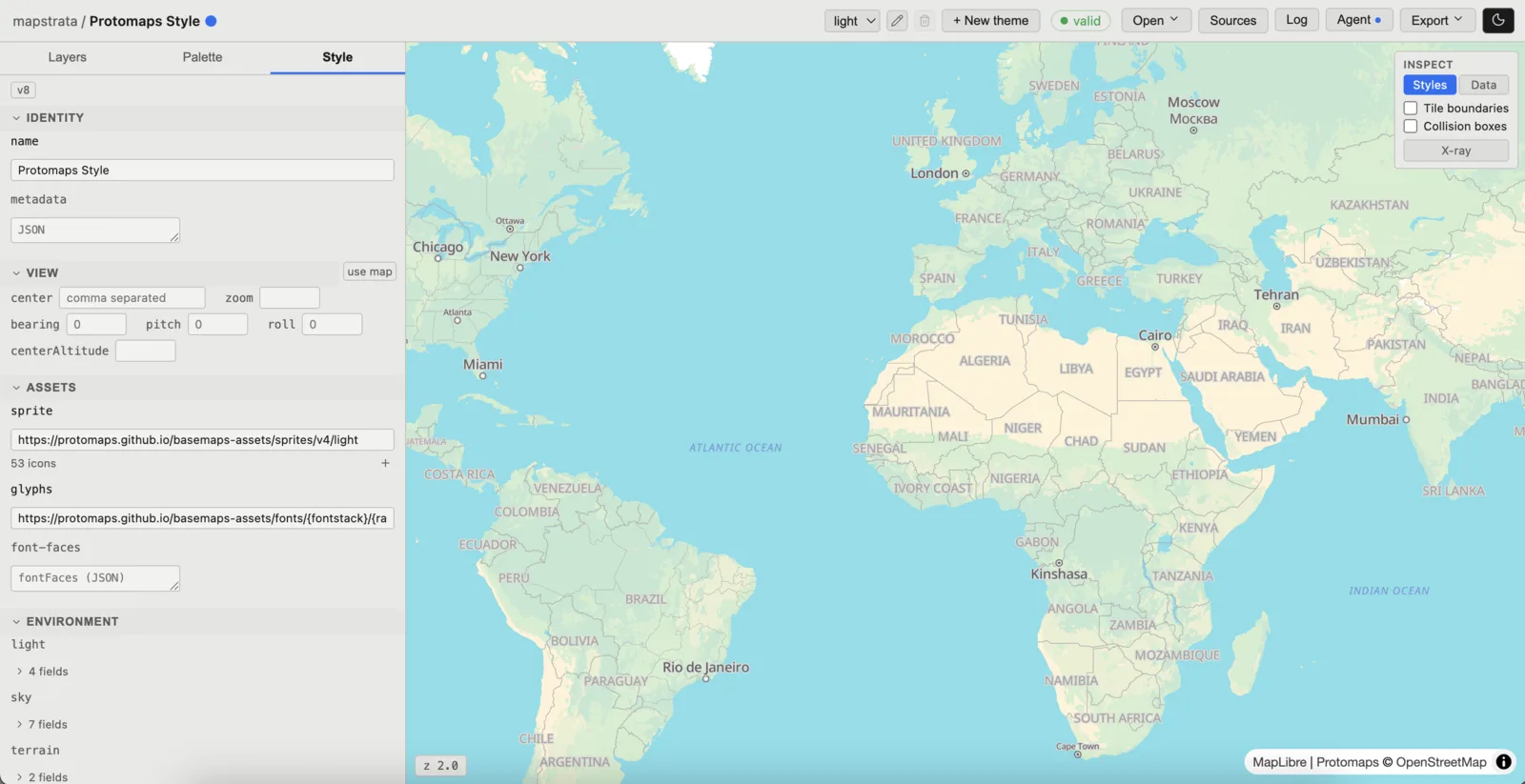
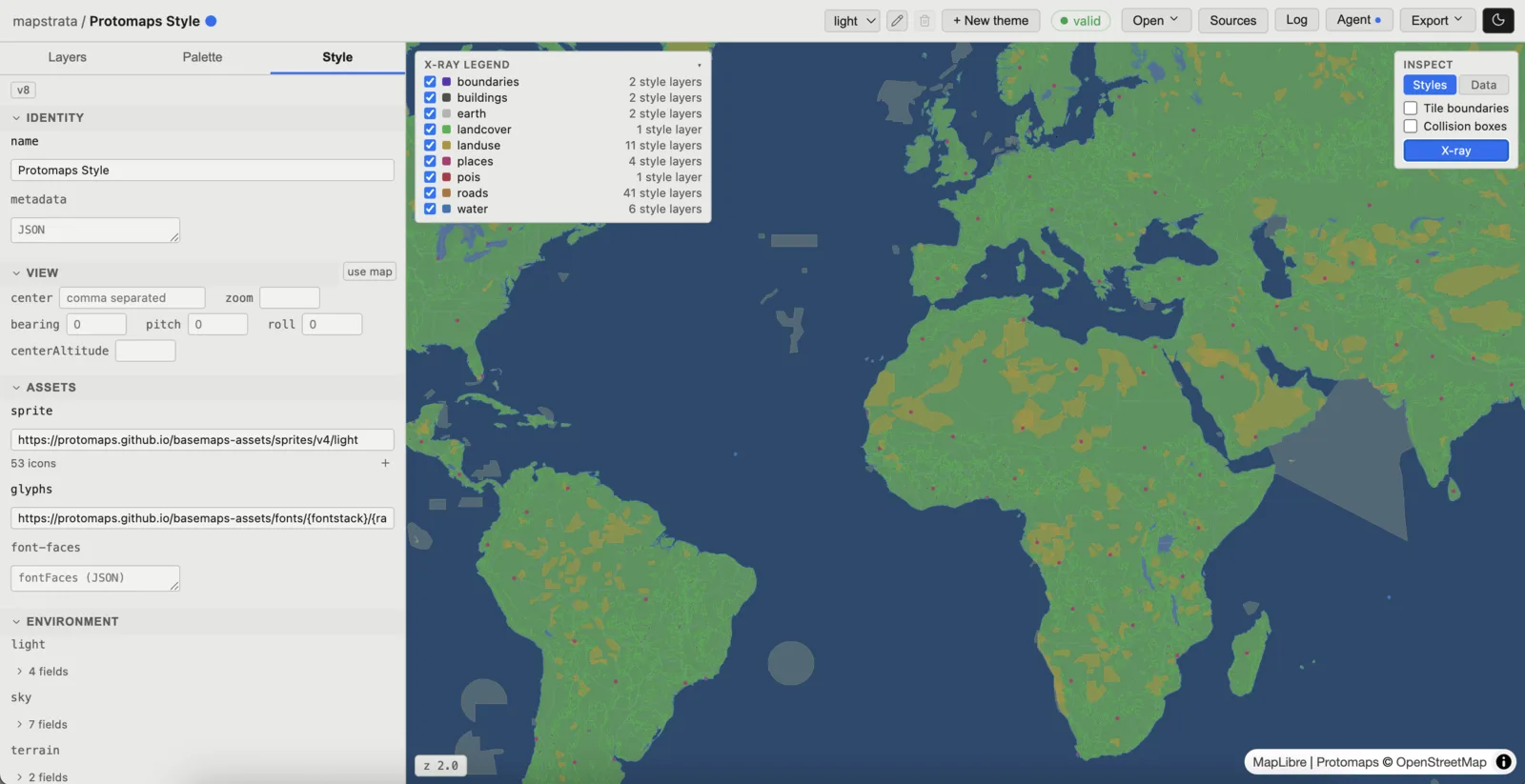
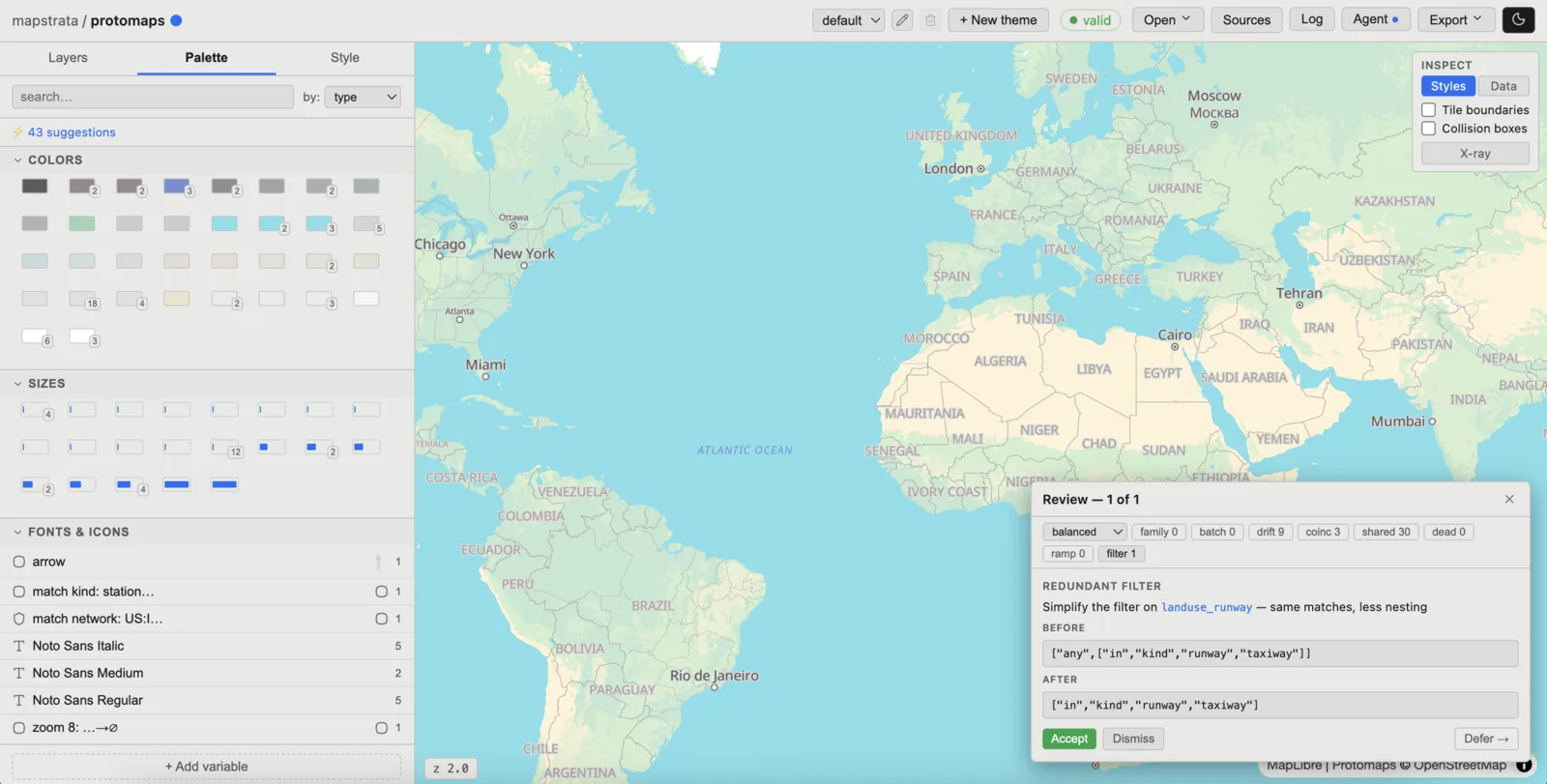
The suggestion queue proposes; you decide
Mapstrata reads the imported style and proposes variables to create. Each proposal is filed under the heuristic that found it, and nothing is applied until you accept it.
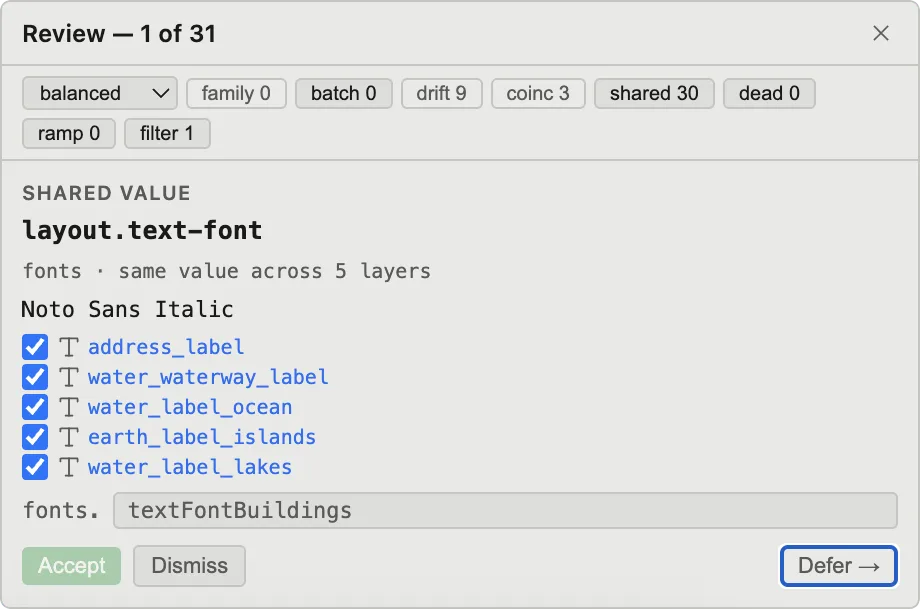
layout.text-font is Noto Sans Italic on three water label layers, an island label layer and address labels. Create a variable for just the water labels, or for every layer that uses it.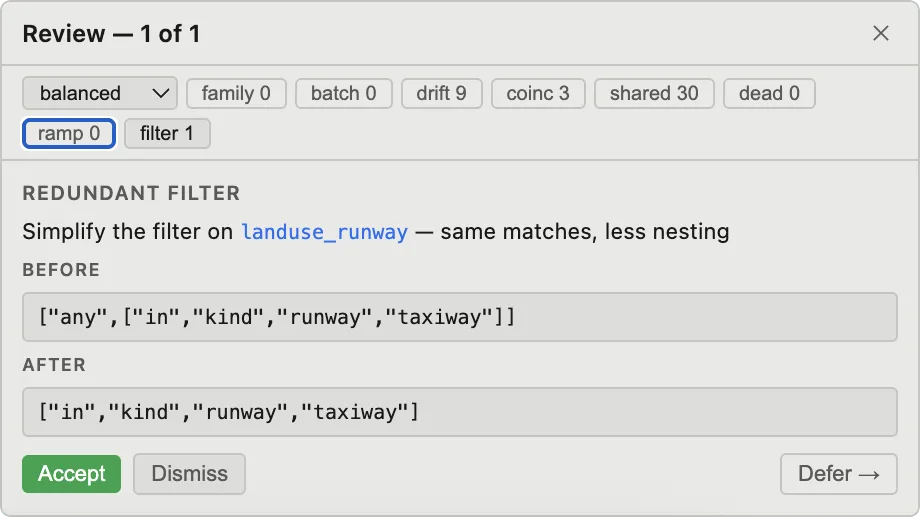
any around a single in on landuse_runway.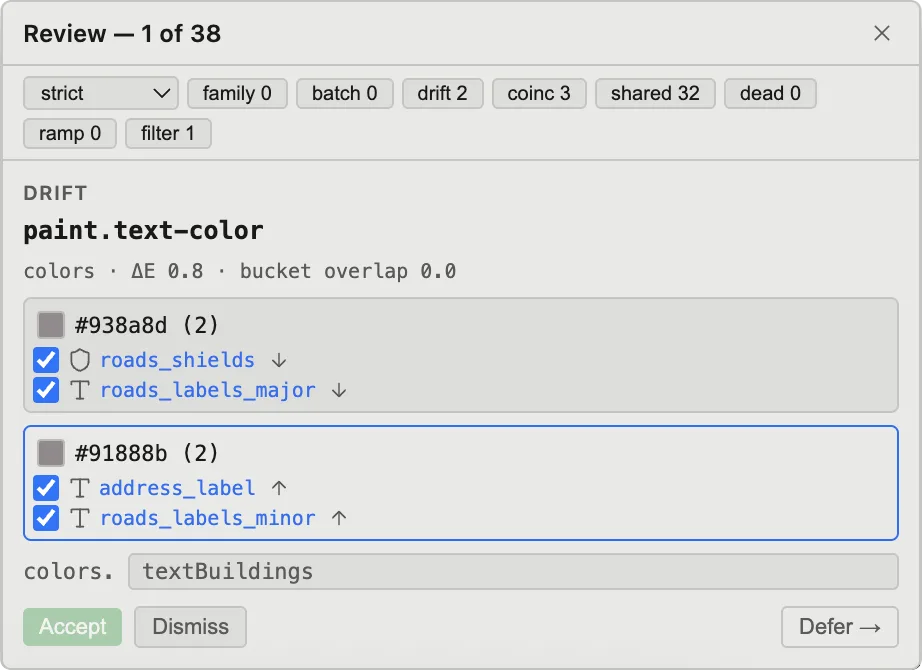
#938a8d, used on two road label layers, and #91888b on two more, or merge them into one.Theme-pairing
Point at a sibling style on the same tile source. Protomaps Dark as seed.
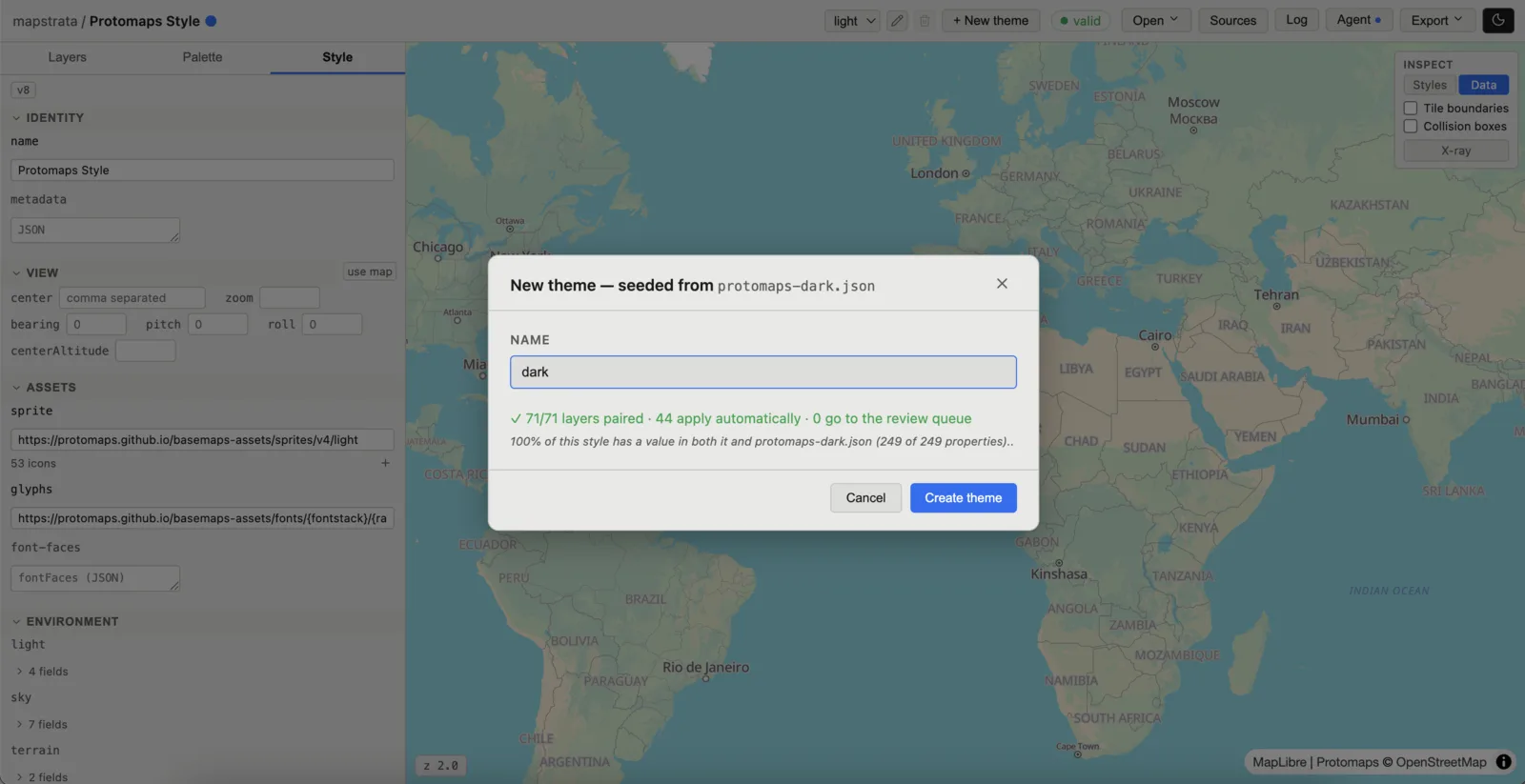
- Layers pair mechanically: same ids, same order, same source.
- There are built-in heuristics for when it isn't this clean.
Scope structure to a theme, not just values
Associate sources and layers with a specific theme.
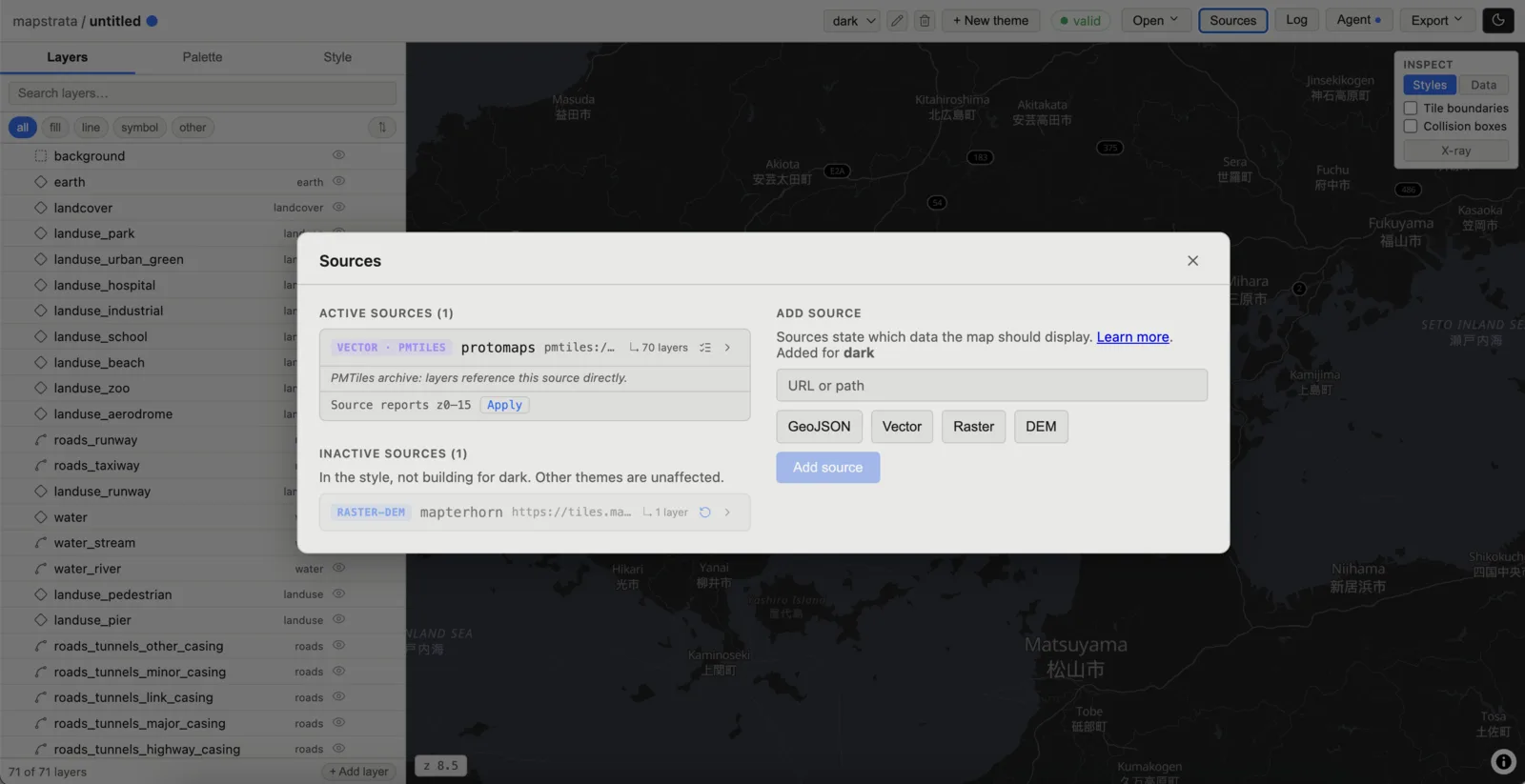
Same project, dark selected.The DEM is in the style but isn't part of this theme. Adding it here is a decision.
Add a hillshade
A raster-dem source and a hillshade built on it.
DEMif it isn't auto-detected. Add a hillshade layer, set the layer order, and tune the style.One person, part time, over a summer.
- 15+ years building web maps
- MapLibre governing board
- Teaching Cartography, University of Washington
Want to fund the work?
So far this is a self-funded, part-time project. If that's something you could support, I'd love to hear from you. Funding helps me prioritize and ship faster.
Check the funding box in the form below and I'll follow up.
Tell me why you're here.
I'm looking for projects that will put Mapstrata through its paces on real stylesheets.
If you just want to know when the source code is public, say so below. If you have more to offer, tell me that too.